The bathroom is one of those rooms where overly aggressive savings come back the fastest. Not always immediately after handover, but after a few months or after the first year of use. That’s when problems with waterproofing, fittings, slopes, built-ins, drainage and details that don’t show on the visualization but you feel every day come to light.
That’s why the safest approach is: you don’t have to overpay for everything, but there are elements you shouldn’t cut costs on, because they determine durability, comfort and the cost of any future corrections. In a well-planned bathroom, the budget is distributed sensibly, not randomly.
Bathroom budget priorities
Don’t cut costs here
- waterproofing and substrate preparation,
- drains, slopes and the shower zone,
- fittings and concealed components,
- quality of execution in wet zones.
Where you can simplify the budget
- decorative add-ons and trendy accents,
- excessively complex material mixes,
- elements that are easy to replace later,
- gadgets without real comfort improvement.
Why does the bathroom expose bad savings the fastest?
Because in this room several things meet at once: water, humidity, intensive daily use, limited space and a large number of technical details. If a mistake appears at the start, fixing it is usually harder than in the living room or bedroom.
In practice, the most expensive things turn out to be not “premium” items, but corrections after savings made where the topic should have been done properly from the start.
What really shouldn’t be saved on in a bathroom?
1. Waterproofing and wet zone preparation
This is absolute fundamentals. Even the most beautiful tiles and fittings won’t hold up if there’s no well-prepared waterproofing underneath. Mistakes in this area can come back very expensively, because they mean disassembly, drying, redoing the work and time loss.
If a walk-in shower, niches, shelves or more demanding details appear in the bathroom, the role of good preparation grows even more.
2. Drains, slopes and shower zone logic
This is an area that’s very often underestimated when budgeting. The investor sees the tile or the faucet, but doesn’t always think about whether the drain is properly sized, whether the slope works correctly and whether the execution detail is refined. And these are precisely the things that determine daily comfort of use and trouble-free water drainage.
3. Fittings that should last for years
This isn’t about buying every element from the top shelf. It’s about not dropping to the level where fittings only look good until installation. A good faucet, concealed kit or drain isn’t just aesthetics — it’s also durability, parts availability and a smaller chance of service problems.
4. Built-ins and joinery in contact with moisture
The vanity unit, niche built-ins, countertops and shelves in the bathroom should be matched to usage conditions. Cheap solutions look good for a moment, but with intensive contact with moisture they can quickly show their limitations.
5. Execution quality, not just the material itself
Even good materials won’t help if details are executed sloppily. In the bathroom, precision counts: corners, transitions, expansion joints, contact between surfaces and fittings, evenness of installation and consistency of all layers.
Where can you look for savings without risk?
A budget doesn’t have to mean cutting everything equally. There are areas where you can save without technical loss and without losing daily comfort.
- on more decorative elements that can always be replaced later,
- on very trendy finishes that raise the price but don’t improve function,
- on excess elaborate gadgets that don’t change daily usage quality,
- on excessive material mixing that complicates execution and raises cost.
In other words: save less where the system’s durability is at stake, and more where it’s only about a visual effect that can be simplified without harming quality.
Is it worth paying extra for tiles and large formats?
Sometimes yes, but a more expensive tile alone doesn’t always give a better effect. In the bathroom, the choice of format for the room, installation quality, cut layout and consistency with other materials matter equally. If the budget is tight, it’s better to have a sensibly chosen tile properly laid than a very expensive material combined with “shortcut” workmanship.
And what about microcement?
This solution can give a very good effect, but only when treated as a technology, not just a fashionable look. If you’re considering this option, also check the guide on microcement in the bathroom: advantages, limitations, care and cost.
How to combine budget, aesthetics and durability?
It’s best to start by establishing priorities. In practice, a sensible order is:
- first technical safety and invisible layers,
- then ergonomics, layout and daily comfort,
- finally decoration and add-ons.
This approach not only allows better budget control but also limits the risk that the most expensive decisions turn out to be the least relevant for daily use.
Real execution instead of just inspirations
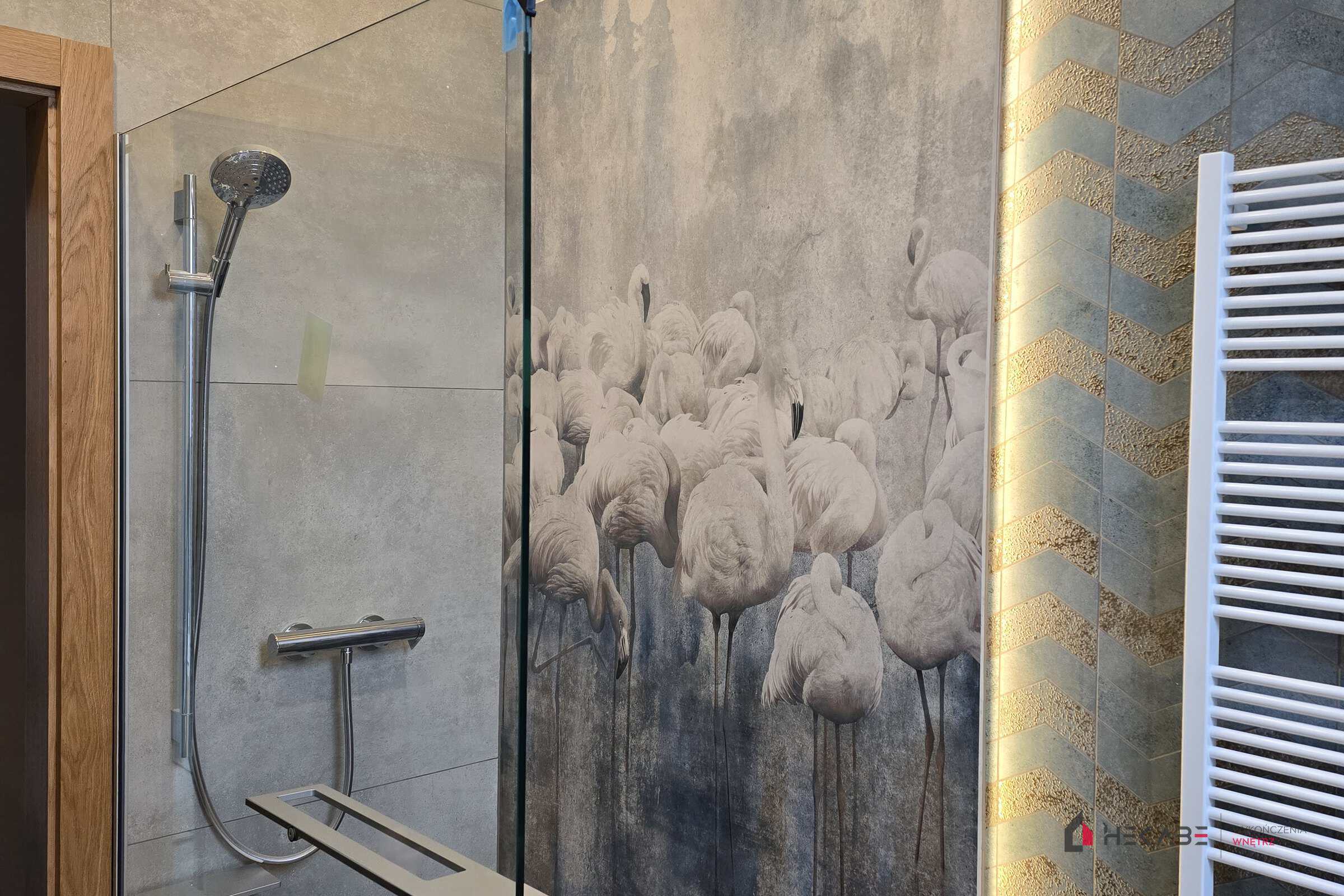
A well-designed and executed bathroom doesn’t have to be overloaded. Sometimes the greatest quality comes from properly executed details, good material logic and a coherent layout. A good example of this approach is the Gawronów Bathroom, where the effect is built not by random add-ons but by the whole composition and execution quality.
Frequently asked questions
What not to save on in the bathroom?
Above all, on waterproofing, drains, slopes, fittings and the quality of wet zone execution. These are the elements that determine durability and the cost of any corrections.
Is it worth paying extra for better fittings?
Yes, when it comes to durability, service and daily comfort. You don’t have to choose the most expensive models, but it’s not worth dropping to a random minimum.
Where do mistakes most often appear after a few months?
Most often in the shower zone, at drains, on material joints and at poorly executed built-ins in contact with moisture.
Is it worth investing in technical details in a small bathroom too?
Yes, because limited space doesn’t reduce the risk of problems. On the contrary: in a small bathroom every mistake is more noticeable on a daily basis.
Want to plan your bathroom wisely without expensive corrections?
If you’re finishing an apartment in Katowice or anywhere in Silesia, we’ll prepare a quote for you and help you arrange the bathroom scope so that the budget works for durability and daily comfort, not for random add-ons.
Also see bathroom renovation in Katowice, interior finishing and microcement in Katowice, if you’re considering this finishing standard.
See also
If you’re planning interior finishing in Katowice or Silesia, continue to related services, projects and further Hekabe guides.